Marriage Joins Two Families in Enugu-Ezike
In Enugu-Ezike, traditional marriage is not a private affair between only a man and a woman. Across all 33 autonomous villages and four ancestral clans (Ezzodo, Itodo, Essodo, and Ozzi) in Igbo-Eze North Local Government Area of Enugu State, marriage joins two extended families (Umunna) into a lifelong relationship called Ndi Ogo (in-laws) [1].
Elders say that one person does not marry a wife alone. Because marriage builds a new family line and brings two communities closer together, the steps are taken slowly and openly. Family elders, the Onyishi (the oldest living man in the family group), the Umunna (men of the family), the Umuada (daughters of the family), and the wives married into the family (Ndi Inyom) all play clear roles [1][2].
While the main stages are the same across Enugu-Ezike, small details such as marriage list items, palm wine quantities, and local names can differ slightly from one village to another [1].
Step 1: Knocking on the Door (Iku Aka)
When a man and a woman decide to marry, the man first tells his father and close relatives. His family does not show up at the bride's home without notice. Instead, they usually go through a trusted middleman who knows both families and can speak well for them [1].
On the agreed day, the groom goes with his father, uncles, or elder relatives to the bride's father's compound. As part of Enugu-Ezike hospitality (Ileta Ndi Obia), the host family first offers drinking water as a sign of peace and welcome, followed by kola nut (Oji Igbo) [2]. The groom's family brings kola nuts and fresh palm wine (Nkwu-Elu) to state clearly that their son has seen a woman he wants to marry in that compound [1][2].
This first visit is simple and friendly. No bride price is discussed on this day. The bride's father asks his daughter in front of the visitors if she knows the man and agrees to the visit. Once she says yes, the two families agree to begin the next step [1].
Step 2: Family Background Checks (Iju Ese)
After knocking on the door, both families take time for quiet background checks known as Iju Ese [1]. This is one of the most important stages in Enugu-Ezike marriage because both sides want a peaceful and lasting home.
Trusted elders from each family ask quiet questions in the other person's village to check four main things:
- Blood relationship: They confirm that the man and the woman do not share a close family bloodline where marriage is forbidden.
- Character and peace: They check whether the couple and their parents are honest, hardworking, and respectful to neighbors.
- Family history: They ask if there are serious hidden family problems or unsettled disputes that could hurt the marriage later.
- Home environment: The bride's family wants to be sure their daughter will be treated well in her new home [1].
If both sides are happy with what they learn, the bride's family invites the groom's family back for the marriage list and bride price talks [1].
Step 3: Bride Price and the Marriage List (Ime Ego and Ego Isi)
When both families agree to move forward, representatives of the groom's Umunna return to the bride's home to collect the marriage list and discuss the bride price (Ego Isi) [1].
It is important to understand what bride price really means in Enugu-Ezike. A daughter is never bought or sold. Because of this:
- *The bride price (Ego Isi) is small and symbolic.* The bride's father and elders settle on a modest amount that proves the marriage is proper and recognized by custom. Paying it gives the husband full respect in the bride's family and confirms the family rights of the children born in the marriage [1].
- Traditional gifts are shared across family groups. The marriage list covers food, drinks, and gifts given to different groups in the bride's family so everyone blesses the union:
- The bride's father and mother: Wrappers, head-ties, kola nuts, palm wine, drinks, and other gifts thanking them for raising their daughter.
- *The Umunna (men of the kindred):* Kola nuts, palm wine, drinks, and customary dues showing that the extended family approves the marriage.
- *The Umuada (daughters of the family, led by the Ishi-Ada) and Ndi Inyom (wives in the family):* Small gifts and refreshments honoring the women who guide family peace and lead parts of the wedding [2].
- The village youths: Drinks and youth dues so the young men help keep order and celebrate with the family [1].
Across many villages in Enugu-Ezike today, parents, town unions, and traditional rulers encourage fair and simple marriage lists so young people can marry without falling into heavy debt [1].
Step 4: The Public Wedding and Wine Carrying (Igba Nkwu)
Igba Nkwu (carrying the palm wine) is the public traditional wedding held in the bride's family compound or village square. Relatives, friends, neighbors, and visitors from near and far gather to witness the marriage [1].
Why Enugu-Ezike Palm Wine Matters So Much
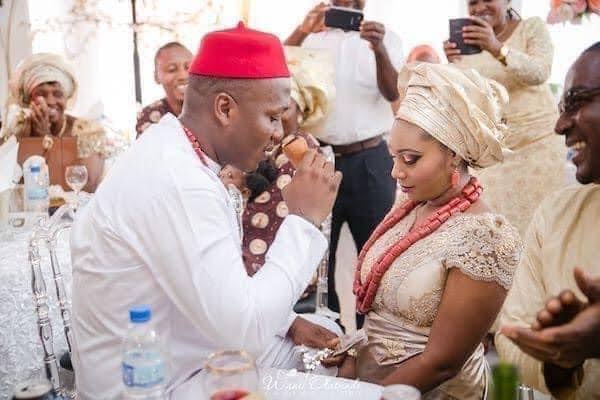
Enugu-Ezike is famous across Nigeria for pure, natural palm wine tapped from standing palm trees, known locally as Nkwu-Elu [2]. Master tappers (Diochi) tap this wine fresh across Igogoro and neighboring villages, and elders prize the thick bottom pour (ike mmanya) [2]. Because fresh palm wine is part of Enugu-Ezike identity, serving real, pure palm wine during Igba Nkwu is a point of pride for both families [1][2].
Main Events During Igba Nkwu
- *Opening prayer and breaking of kola nut (Iwa Oji): The Onyishi* (the oldest living man in the kindred) or the bride's father breaks the kola nut and prays for long life, peace, good health, and children for the new couple [2].
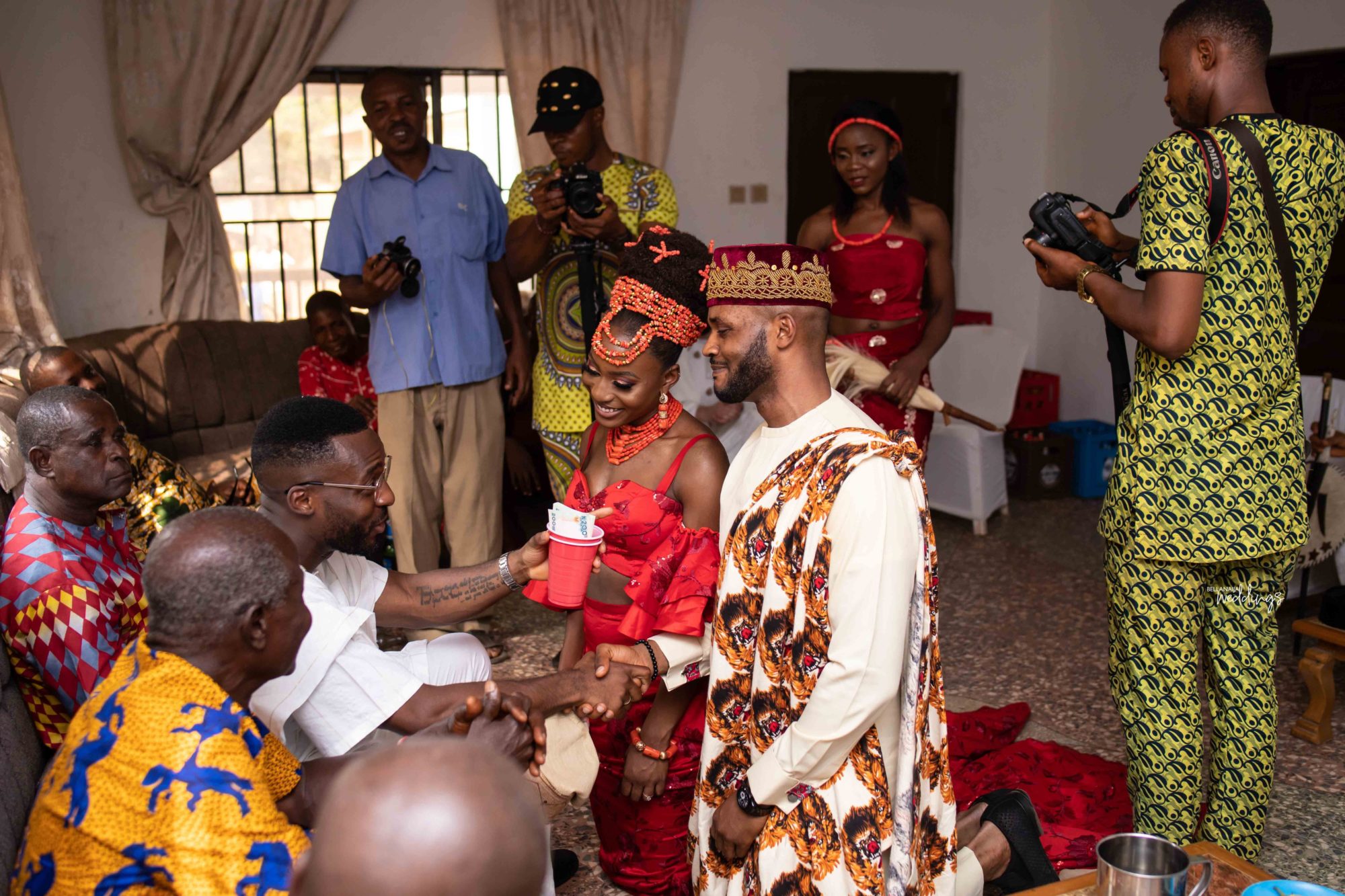
- Handing over the cup of palm wine: The bride's father fills a cup with fresh palm wine and hands it to his daughter. He tells her to go into the crowd and give the wine to the man she has chosen to marry [1].
- Finding the husband: The bride dances through the crowd with her friends and music while looking for her husband, who sits among his relatives and friends [1].
- Kneeling and drinking the wine: When she finds him, she kneels respectfully and hands him the cup. He drinks from it, often puts a gift of money inside the cup, and the crowd cheers. This public act shows everyone that the marriage is voluntary and agreed by both of them [1].
- Parents' blessing: The husband and wife walk back together and kneel before the bride's father and mother. The parents pray for them and hand their daughter over to her husband's family with advice to love and protect her [1].
- Food, music, and dancing: Guests enjoy local meals such as pounded yam with bitterleaf or soup, , fresh palm wine, and music .
Step 5: Escorting the Bride to Her New Home (Idu Uno)
After Igba Nkwu, the bride's parents, mothers (Ndi Inyom), sisters, and relatives escort her to her husband's house. This custom is called Idu Uno [1].
The bride's family sends her off with cooking pots, plates, wrappers, food items, and modern household goods. These gifts show that her family supports her new home and that she is leaving her father's compound with pride and honor [1].
How the Four-Day Market Week Affects Wedding Dates
In Enugu-Ezike, families always check the traditional Igbo four-day week (Eke, Orie, Afo, and Nkwo) before choosing dates for Iku Aka or Igba Nkwu [3].
Every village has its own main market day, such as Eke Ozzi in Ogrute, Eke Amufie, Orie in Umuida, Aji, Okpo, Amachalla, and Umuogbo, Afo in Umuagama and Umuopu, and Nkwo in Aji, Ugbaike, and Igogoro [3]. Elders help families pick a day when relatives are free from major trading and when no village festival or sacred rest day will clash with the celebration [3].
Although marriages take place all year round, the busiest months in Enugu-Ezike are November to January (during the dry season and Christmas homecoming) and around Easter, when sons and daughters living in other cities and abroad return home [1].
Lifelong Family Duties After Marriage
In Enugu-Ezike, marriage starts a lifelong bond between in-laws (Ndi Ogo). Even after the wedding is over, the husband and his relatives continue to stand with his wife's family [1]:
- *Childbirth care (Omugo): When the wife gives birth, her mother or a close female relative comes to stay with her to cook warm soups, bathe the baby, and help her rest. Visitors bring gifts and greet the mother with traditional Enugu-Ezike greetings such as Dare omugo, Aanya omugo, and Oru nwa aturu* [3].
- Family celebrations and burials: A son-in-law supports his in-laws during good times and stands strongly with them during burials when a parent-in-law passes away [1].
- Keeping peace in the home: If serious disagreements happen between husband and wife, elders and Umuada from both families step in to talk things through and protect the home [2].
Faithfulness and the Ndi-ishi Custom
Marriage in Enugu-Ezike has always placed strong value on faithfulness. One old local custom linked to marriage is Ndi-ishi (also called Ndishi or Igba-ishi) [4]. In traditional belief, a married woman who commits adultery faces spiritual trouble, such as sickness or family distress, until she confesses and goes through a cleansing rite [4].
While many traditional elders view Ndi-ishi as a custom meant to protect marriage, university studies published in Ikenga (2024) point out that the blame and punishment fall almost entirely on women while men face far less blame [4]. Today, this custom is an active topic of discussion in Enugu-Ezike as communities talk about faithfulness, Christian teaching, and fair treatment for both wives and husbands [4].
Traditional Marriage and Church Weddings Today
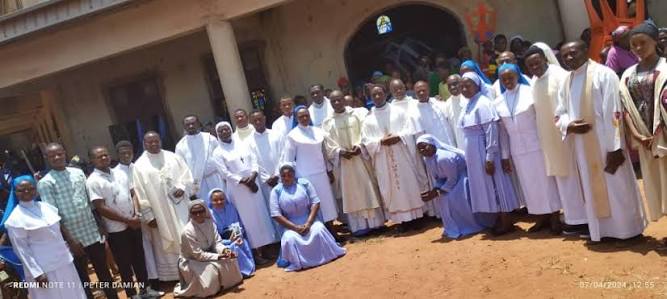
Today, most Enugu-Ezike families belong to Catholic, Anglican, or other Christian churches, alongside people who follow traditional ways or Islam. Most couples perform both the traditional marriage (Igba Nkwu) and a church or court wedding [1].
In almost all cases, the traditional marriage comes first or takes place during the same week. This is because, in Enugu-Ezike society, parental blessing and the agreement of both Umunna remain the true foundation of a respected marriage. Even Enugu-Ezike people living in Lagos, Abuja, Europe, or America still travel home to perform Igba Nkwu in their family compound [1].
Share Your Village's Specific Marriage Customs
Enugu-Ezike has 33 autonomous villages, and each village has its own small details, local dialect words, and marriage list guidelines. If you are an elder, Onyishi, Ishi-Ada, or community member with verified details or original photos of traditional marriage in your village, please share them through the Contribution Studio at /suggest so we can preserve your village's exact record for future generations [1].