
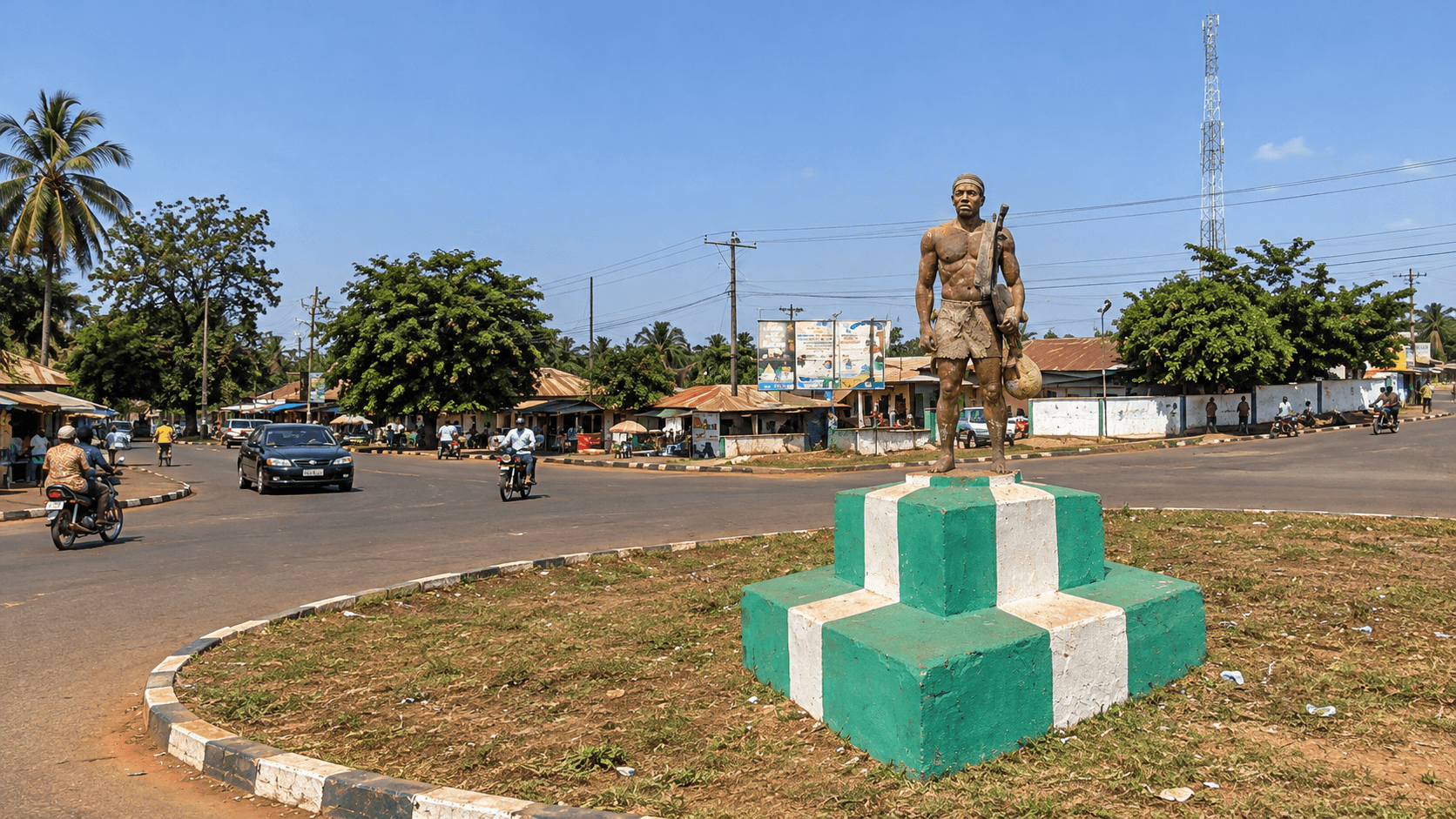
How It Started: The Journey to Amube Hill
The story of Enugu Ezike begins with a great man named Ezike Oba. Long ago, he traveled in search of a good place to settle and farm. While elders sometimes debate his exact starting point—some say he came from Enugwu-Ukwu, while others point to trade links with the Igala people or the Benin empire—history agrees on where he finally stopped.
Ezike Oba found a high, fertile area called Amube Hill (Elugwu Ezike). It was a safe place with good soil, so he made it his home.
As time passed, his family grew. He had four sons, and these four sons became the fathers of the four main clans we know today: Ezzodo, Itodo, Essodo, and Ozzi. From these four sons, the community expanded into the 33 ancestral villages that make up Enugu Ezike.
How We Are Led: The Onyishi
Unlike places that are ruled by one central king, Enugu Ezike has always respected age and wisdom. The leader of any village or family is called the Onyishi. The Onyishi is simply the oldest living man in that group.
The Onyishi holds the Ofo, which is the traditional staff of truth. He works together with the Oha, a council made up of other elders. Because leadership is based purely on age, no one can buy the position with money. The Onyishi is the one who blesses the land, settles serious disputes, and announces the dates for important festivals.
Our Spiritual Life: Attama and Inyama
Spirituality is a very important part of our culture. The people who oversee the shrines and talk to the deities on behalf of the community are called the Attama (chief priests). They make sure the community stays peaceful and the farms yield good crops.
We also have highly respected priestesses known as the Inyama. These are women chosen by the deities for sacred duties. You can recognize an Inyama priestess because she wears a special heavy iron anklet called the Echi. They follow strict traditional rules and are treated with deep respect by everyone in the villages.
Our Location and Borders
Enugu Ezike is located at the very top of the Igbo cultural map. Because of where we are, we share borders with Benue State to the North and Kogi State to the West. To the south, we border Ovoko, Amala, and Obollo-Afor. Even though we have traded and mixed with our northern neighbors for centuries, we are proud Igbos and hold tightly to our unique Ezike Oba dialect and culture.