Farming, Melon Production, Farm Loans, and Climate Change in the Enugu-Ezike Agricultural Zone
What university field studies show about crops, melon farming, farm loans, phone and radio use, and how changing rainfall affects farmers in Enugu-Ezike.
Enugu Ezike Editorial Archive24 November 20266 min read4 Citations
Under Enugu State's six agricultural zones, the Enugu-Ezike Agricultural Zone covers three Local Government Areas in northern Enugu State: Igbo-Eze North, Igbo-Eze South, and Udenu[1].
The zone sits at about , where the northern edge of the tropical rainforest meets the southern savannah . It has well-drained reddish soil and two main seasons each year: the rainy season and the dry harmattan season .
Most families in the zone are smallholder farmers. Common crops grown on family land include yam, cassava, cocoyam, maize, cowpea, melon (egusi), vegetables, cashew, mango, and oil palm[1][2]. Families also raise goats, sheep, pigs, and poultry[1].
Melon (Egusi) Farming in the Enugu-Ezike Zone
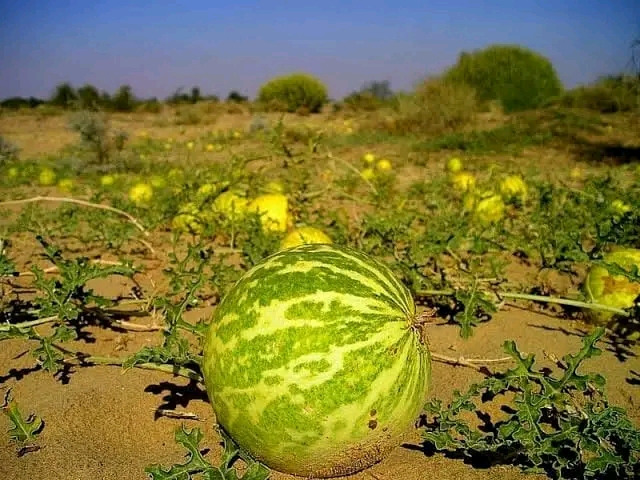
Melon (egusi) is an important food and cash crop across northern Enugu State. In 2017, researchers J. C. Iwuchukwu and G. O. Ekeh at the University of Nigeria, Nsukka interviewed 90 melon farmers across three blocks and nine circles in the Enugu-Ezike Agricultural Zone [2].
Their field study showed how local melon farming works in daily life [2]:
Experienced older farmers: The average melon farmer was 53 years old, came from a household of 9 people, and had 11.4 years of farming experience [2].
Local seeds and mixed farms:77.9 percent grew local melon varieties, and 81.8 percent planted melon in mixed cropping alongside crops like yam and cassava [2].
Distant farmlands:91.1 percent grew melon on farms located far away from their homes [2].
Rain-fed and organic:83.3 percent planted during the rainy season, and 52.2 percent used organic manure [2].
Quick local sales:68.9 percent sold their harvest right away rather than storing it, mostly selling directly to consumers (75.6 percent) from their homes (68.9 percent) [2].
Because most farmers worked on a small scale, their average yearly spending on melon was 4,394.60 naira, bringing in 7,455.40 naira in yearly sales [2]. The study found that physical stress, poor roads, weak access to farm inputs, and limited government support held melon farmers back from earning more [2].
How Farmers Get Loans and Farm Credit
Having money at planting time is one of the biggest hurdles for rural farmers. In 2020, researchers Ikenna Charles Ukwuaba, Zechariahs Benapugha Owutuamor, and Cynthia C. Ogbu studied 60 crop farmers in the Enugu-Ezike Agricultural Zone to see where they got farm loans [1].
Their findings showed that most crop farmers still rely on family and community networks instead of banks [1]:
Informal sources led (60.0 percent): Farmers mostly borrowed from friends and relatives (56.7 percent), Esusu savings groups (11.7 percent), and age groups (10.0 percent)[1].
Formal and semi-formal sources were smaller (40.0 percent overall): Only 18.3 percent borrowed from banks, 1.7 percent from cooperatives, and 1.7 percent from churches[1].
Why banks were hard to reach: Most farmers owned small plots of 1 to 5 hectares and did not have the land papers or security required for bank loans [1].
How loans were used:76.7 percent borrowed directly for farming, 16.7 percent for trading, and 5.0 percent for education [1]. Nearly half (46.7 percent) experienced delays before receiving their money [1].
How Men, Women, and Youth Get Farming Information
Modern farming depends on timely news about fertilizer, seeds, and crop diseases. In 2014, I. A. Enwelu and three colleagues at the University of Nigeria, Nsukka interviewed 90 rural farmers across men, women, and youth in the Enugu-Ezike Agricultural Zone [4].
Mobile phones and radio were the main tools: To find farm inputs such as fertilizer, 84.5 percent of farmers used mobile phones and 80.0 percent used radio[4]. To learn about better crop and animal varieties, 66.7 percent used mobile phones and 60.0 percent used radio [4]. In the 2020 credit study, 68.3 percent of farmers also relied on phone calls to learn about loans, compared with 15.0 percent from government extension officers [1].
Gaps in pest control news: Only 21.2 percent of farmers got pest and disease control advice through radio [4].
Gender gap in access: Men used mobile phones (31.1 percent) and radio (30.0 percent) to share farm input news more than youth (27.8 percent and 26.7 percent) and women (25.6 percent and 23.3 percent) [4]. Because women do a large share of rural farm work, the researchers warned that helping women get better phone, radio, and internet access is vital for food supply [4].
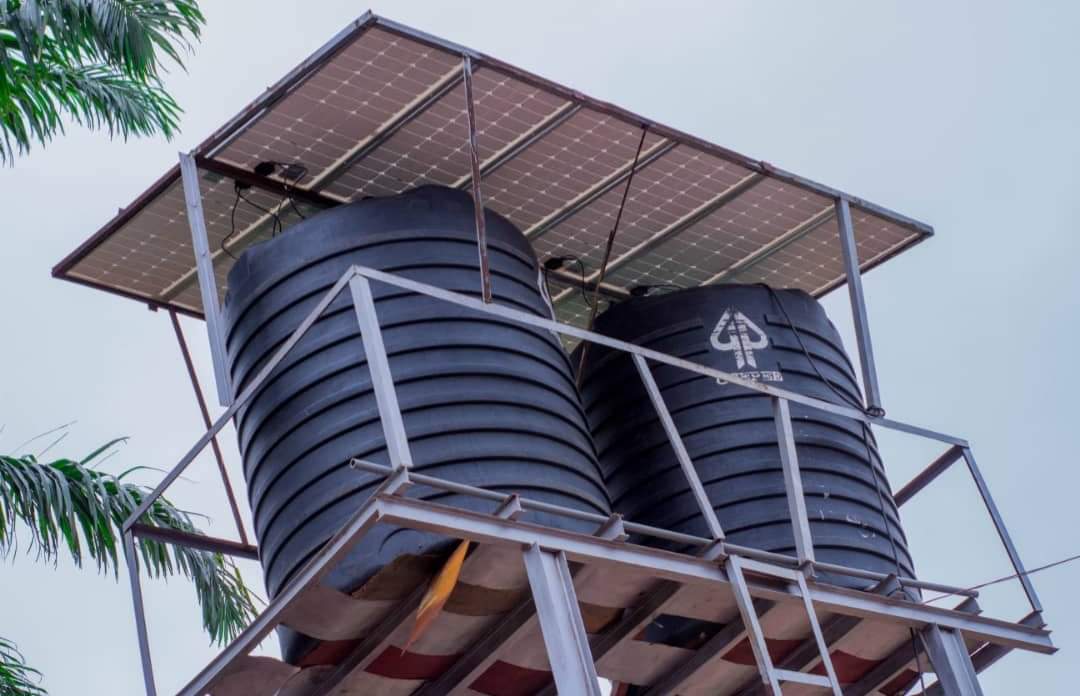
Power supply barrier:83.3 percent of farmers said steady electricity was needed to make phones and digital tools work better for agriculture [4].
How Climate Change Is Changing Farm Income
In 2024, a team of five agricultural economists at the University of Nigeria, Nsukka (Kelvin Nnaemeka Nwangwu, C. Ume, Ogochukwu Gabriella Onah, C. J. Chiemela, and E. E. Omeje) studied how changing weather is affecting farmer income in two zones of Enugu State: Enugu-Ezike and Nsukka[3].
Because farming in this area depends heavily on rain, 50.8 percent of surveyed farmers reported unpredictable rainy seasons, and 35.0 percent reported loss of pastureland and vegetation [3].
When the researchers compared what farming families did ten years earlier against their work in 2024, they found a sharp move away from traditional farm work into small businesses [3]:
Farm activities that dropped: Goat and sheep rearing dropped from 56.7 percent to 23.3 percent, fishing fell from 44.2 percent to 11.7 percent, rabbit rearing dropped from 30.8 percent to 15.8 percent, basket weaving fell from 35.8 percent to 20.8 percent, snail collection dropped from 30.8 percent to 17.5 percent, and palm oil processing fell from 31.7 percent to 22.5 percent[3].
Non-farm work that grew: Petty trading jumped from 35.0 percent to 58.3 percent, barbing rose from 37.5 percent to 55.8 percent, food vending grew from 41.7 percent to 57.5 percent, tailoring rose from 25.8 percent to 40.0 percent, hair plaiting climbed from 33.3 percent to 45.8 percent, carpentry rose from 25.0 percent to 32.5 percent, and transport work grew from 23.3 percent to 30.0 percent[3].
What stayed steady:Palm wine tapping stayed completely unchanged at 10.8 percent, matching earlier research showing how dependable palm wine income remains in Enugu-Ezike [3].
The researchers warned that if unpredictable rainfall keeps pushing families out of farming and livestock, long-term food production in northern Enugu State could decline unless farmers receive stronger climate support, better seeds, and easier credit [1][3].
Assessment of Agricultural Credit Sources and Accessibility in Nigeria (2020)
Ikenna Charles Ukwuaba, Zechariahs Benapugha Owutuamor, and Cynthia C. Ogbu • Review of Agricultural and Applied Economics (RAAE), Vol. 23, No. 2, pp. 3-11
Can Climate Change Affect Income-Generating Activities?: Evidence from Farmers in Enugu State Nigeria (2024)
Kelvin Nnaemeka Nwangwu, C. Ume, Ogochukwu Gabriella Onah, C. J. Chiemela, and E. E. Omeje • American International Journal of Agricultural Studies, Vol. 9, No. 1, pp. 1-6
Colonial Rule in Enugu-Ezike: Native Courts, the 1935 Intelligence Report, and Leadership Changes
Learn how British colonial rule worked in Enugu-Ezike between 1908 and the 1930s, including the Warrant Chief system, the Native Court, C. K. Meek's 1930 study, and V. K. Johnson's 1935 Intelligence Report.